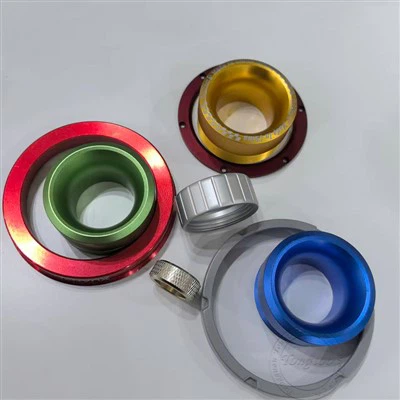
In the dynamic landscape of manufacturing, 3D printed die castings have emerged as a revolutionary technology, offering unparalleled flexibility, precision, and efficiency. As a leading provider of 3D Printed Die Castings, we understand the intricacies of this cutting-edge process and are committed to sharing the best practices to help you achieve optimal results.
Understanding 3D Printed Die Castings
3D printed die castings combine the benefits of 3D printing technology with the traditional die casting process. This innovative approach allows for the creation of complex geometries and customized designs that were previously impossible or extremely challenging to achieve. By using 3D printing to create the die, manufacturers can significantly reduce lead times, lower costs, and improve the overall quality of the castings.
Best Practices for Manufacturing 3D Printed Die Castings
1. Design Optimization
The first step in manufacturing high-quality 3D printed die castings is to optimize the design. This involves working closely with a team of experienced engineers and designers to ensure that the part is designed for manufacturability. Considerations such as wall thickness, draft angles, and gate locations are crucial to ensure proper filling and solidification of the molten metal. Additionally, the design should take into account the limitations and capabilities of the 3D printing process to avoid issues such as warping, cracking, or poor surface finish.
2. Material Selection
Choosing the right material for 3D printed die castings is essential for achieving the desired properties and performance. The material should have good thermal conductivity, high strength, and excellent wear resistance to withstand the high pressures and temperatures involved in the die casting process. Common materials used for 3D printed die castings include aluminum alloys, which offer a good balance of strength, weight, and cost. Aluminum Alloy Die Casting is a popular choice due to its excellent castability, corrosion resistance, and high thermal conductivity.
3. 3D Printing Process
The 3D printing process plays a critical role in the quality of the die. There are several 3D printing technologies available, each with its own advantages and limitations. Selecting the appropriate technology depends on factors such as the complexity of the design, the required accuracy, and the production volume. Some common 3D printing technologies used for die casting include stereolithography (SLA), selective laser sintering (SLS), and fused deposition modeling (FDM). It is important to work with a reputable 3D printing service provider that has experience in producing high-quality dies for die casting applications.
4. Die Coating
Applying a suitable coating to the 3D printed die can significantly improve its performance and lifespan. The coating helps to reduce friction, prevent adhesion of the molten metal, and protect the die from wear and corrosion. There are various types of coatings available, such as ceramic coatings, nitride coatings, and diamond-like carbon (DLC) coatings. The choice of coating depends on the specific requirements of the die casting process and the material being used.


5. Process Control
Maintaining strict process control is crucial for ensuring the consistency and quality of 3D printed die castings. This includes monitoring and controlling parameters such as temperature, pressure, and injection speed during the die casting process. By using advanced sensors and monitoring systems, manufacturers can detect and correct any issues in real-time, ensuring that each casting meets the required specifications.
6. Quality Assurance
Implementing a comprehensive quality assurance program is essential for ensuring the reliability and performance of 3D printed die castings. This includes conducting thorough inspections and tests at various stages of the manufacturing process, from the design phase to the final product. Non-destructive testing methods such as X-ray inspection, ultrasonic testing, and dye penetrant testing can be used to detect any internal defects or flaws in the castings. Additionally, dimensional inspection using coordinate measuring machines (CMMs) can ensure that the castings meet the required tolerances.
Benefits of 3D Printed Die Castings
The adoption of 3D printed die castings offers several benefits over traditional die casting methods. Some of the key advantages include:
- Reduced Lead Times: 3D printing allows for the rapid production of dies, significantly reducing the lead time from design to production. This enables manufacturers to bring new products to market faster and respond quickly to changing customer demands.
- Cost Savings: By eliminating the need for expensive tooling and reducing the number of production steps, 3D printed die castings can help to lower manufacturing costs. Additionally, the ability to produce complex geometries and customized designs in a single operation can further reduce costs by eliminating the need for secondary machining.
- Improved Design Flexibility: 3D printing enables the creation of complex geometries and customized designs that were previously impossible or extremely challenging to achieve using traditional die casting methods. This allows manufacturers to optimize the design of their products for better performance, functionality, and aesthetics.
- Enhanced Quality and Precision: The high accuracy and repeatability of 3D printing technology ensure that each casting is produced to the exact specifications, resulting in improved quality and precision. This can help to reduce scrap rates and improve the overall efficiency of the manufacturing process.
Conclusion
In conclusion, 3D printed die castings offer a revolutionary approach to manufacturing that combines the benefits of 3D printing technology with the traditional die casting process. By following the best practices outlined in this article, manufacturers can achieve optimal results in terms of quality, cost, and lead time. As a leading provider of 3D Printed Die Castings, we are committed to helping our customers leverage this innovative technology to stay ahead in the competitive manufacturing landscape.
If you are interested in learning more about our 3D Printed Die Castings or would like to discuss your specific requirements, please feel free to contact us. Our team of experienced engineers and designers will be happy to assist you in finding the best solution for your manufacturing needs.
References
- Campbell, J. (2003). Castings. Butterworth-Heinemann.
- Davis, J. R. (Ed.). (2008). Aluminum and aluminum alloys. ASM International.
- Gibson, I., Rosen, D. W., & Stucker, B. (2010). Additive manufacturing technologies: Rapid prototyping to direct digital manufacturing. Springer Science & Business Media.