


CNC Machining
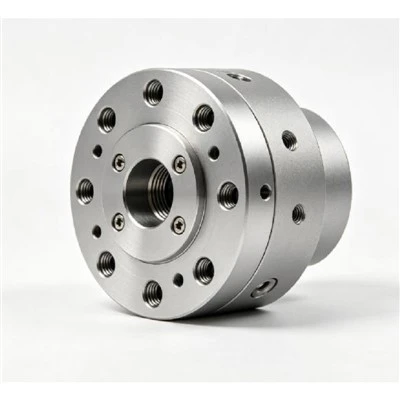
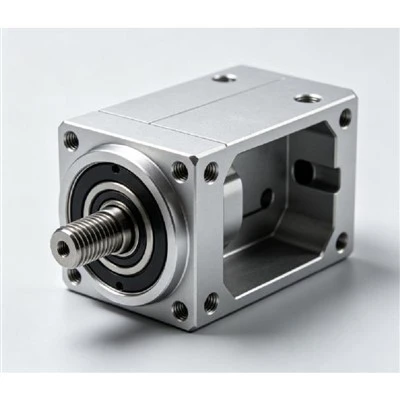
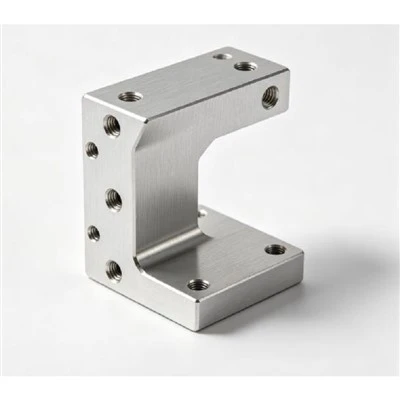
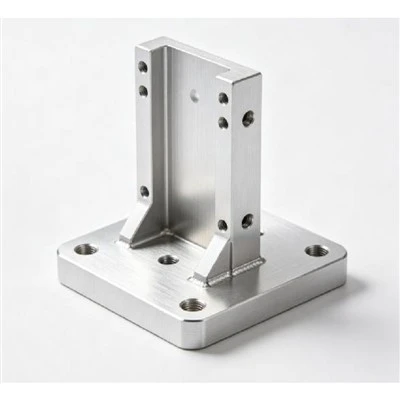
Your Professional cNC machining Supplier
Dongguan Tongtoo Aluminum Products Co., Ltd., established in 2014, is located in Zhongtang Town, Dongguan City. The company specializes in the R&D, design, and manufacturing of aluminum profile molds; the R&D, design, production, and CNC machining of aluminum alloy profiles; and surface treatments for various aluminum products, including powder coating, oil spraying, electrophoresis, electroplating, anodizing, and coloring. It possesses advanced production equipment and strong technical capabilities.






Why Choose Us
Technological Advantages
The company continuously improves and enhances its technical capabilities, strengthening its innovation capacity, and possesses strong technical advantages in aluminum product deep processing and environmentally friendly surface treatment technologies.
Good Service
The company Professional consultants provide one-on-one communication to tailor mold solutions to your specific needs.
Certifications
The company has passed ISO9001:2015 quality system certification.
Professional Export
The company's products cover various fields globally, the United States, Germany, Denmark, Singapore, Canada, Russia, Africa, and other regions.
Advantages of CNC Machining
High Precision:
CNC systems achieve micron-level accuracy, ensuring every part meets strict tolerance requirements and industry compliance standards.
Complex Geometries:
Multi-axis CNC machines enable the production of intricate shapes, contours, and internal features that are impossible or inefficient with manual machining.
Scalability:
Once programmed, a CNC machine can reproduce identical parts at any volume, whether it’s 10 pieces or 10,000, without compromising quality.
Efficiency:
Automated toolpaths, optimised cutting speeds, and reduced human dependency minimise cycle times and boost overall productivity.
Lower Operational Risk:
Automation removes manual variability, reduces rework, and prevents errors that typically arise from human fatigue or inconsistency.
Higher Throughput:
CNC machines run continuously with minimal supervision, enabling faster delivery schedules and improved production capacity.
Future-Ready Automation Integration:
CNC platforms easily integrate with Industry 4.0 systems, robotic loading, IoT monitoring, predictive maintenance, and AI-driven optimisation, preparing factories for the next era of smart manufacturing.

Turning: Rotates the workpiece against a cutting tool to produce cylindrical parts such as shafts and bushings.
Milling: Uses a rotating tool to remove material and create complex shapes, slots, and contours.
Grinding: Achieves high surface finish and tight tolerances using abrasive wheels.
Drilling: Produces accurate holes with controlled depth and diameter.
Routing: Commonly used for plastics, wood, and composites to create profiles and cut-outs.
Broaching: Removes material using a toothed tool for precise internal features.
Honing: Improves surface finish and dimensional accuracy of internal bores.
Sawing: Cuts raw material to required lengths efficiently.
LASER Cutting: Uses focused laser beams for fast, contactless cutting.
Lapping: Produces ultra-fine surface finishes.
Plasma Cutters: Cut electrically conductive materials at high speed.
Press Brakes: Bend sheet metal accurately.
EDM: Machines hard materials using electrical discharges.
Water Jet Cutters: Cut materials using high-pressure water streams.
Flame Cutters: Used for thick metal plate cutting.
Main Processes Of CNC Machining
CNC Milling: Use a multi-point rotating tool to remove material from the workpiece. Basic mills consist of a 3-axis system (X, Y and Z), which is still one of the most popular and widely used machining processes. In 3-axis machining, the workpiece remains fixed, and the rotating tool cuts along the x, y, and z axes. Meanwhile, most newer mills can accommodate two additional axis, 4-axis CNC machining and 5-axis CNC machining have higher versatility, and they are often used in the production of high-precision parts.
CNC Turning: Use a single-point cutting tools to remove material from the rotating workpiece. In CNC turning, the CNC machine, typically a lathe or turning machine, feeds the cutting tool in a linear motion along the surface of the rotating workpiece, removing material around the circumference until the desired diameter is achieved. Most CNC lathes consist of two axis, X and Z.
Application of CNC Machining
Aerospace Industry
The aerospace industry and CNC machining have developed hand in hand. In fact, the aerospace industry’s requirements have played a key role in developing CNC machining processes. The aerospace industry constantly develops sturdy materials for constructing equipment and other gadgets.
Automotive Industry
The automotive industry is one of the main sectors for CNC machining. CNC machining offers advantages at every stage of the automotive manufacturing process, from prototyping in Research and Development (R&D) to producing large quantities of parts.
Marine Industry
The marine industry relies on high-quality craftsmanship since it creates water transportation that might travel all over the globe. The large-scale manufacturing process for boats and other water transportation requires automation to fulfill the manufacturing deadlines and quality control.
Electronics Industry
As in the case of the automotive industry, the electronics industry uses CNC machining in prototyping and the production stage. An advantage CNC machining offers in electronics is the ability to handle small-scale construction with consistency.
Military and Defense Industry
The requirements of the military and defence industries are similar to those of the aerospace industries. Instead of simple parts, these industries require complex machinery for the wide range of innovative materials and sophisticated equipment they manufacture.
Healthcare Industry
It may seem surprising to know that CNC systems are used in the healthcare sector. However, the applications of CNC machining in healthcare and medicine industry are extensive.
Upload Your Drawing
To get started, simply send us your 2D or 3D drawings and tell us your material, quantity, and surface finish requirements.
Review & Quotation
Our engineering team will review your files, check manufacturability, and provide a clear quotation based on your project specifications.
Production & Quality Control
Once the order is confirmed, we begin production using advanced machining equipment and strict in-process quality control.
Shipping & Delivery
After final inspection, your parts are carefully packed and shipped on time to ensure safe and reliable delivery.

FAQ