


CNC Machined Heat Sinks
CNC Machined Heat Sinks Manufacturer for Custom Aluminum Manufacturing
We are an aluminum-focused manufacturing partner specializing in CNC machining and custom metal component production. Our core capabilities cover precision CNC machining, aluminum profile processing, turning, die casting, mold development, and surface treatment. With 20 years of experience in aluminum machining and finishing, we manufacture custom heat sinks from approved drawings, 3D CAD files, samples, or technical specifications. Established in 2014 with a 50+ person manufacturing team, we provide integrated production support for electronics, automotive, medical equipment, communications, machinery, and LED applications.


Why Choose Us
Aluminum Processing Expertise:
Aluminum profile processing, CNC machining, and surface treatment operate within unified manufacturing routes. Material selection, machining requirements, and finishing specifications are reviewed simultaneously.
CNC-Based Custom Production:
Heat sink bases, fins, mounting holes, threads, slots, pockets, and other machined features are produced from approved drawings. Critical dimensions and tolerances are confirmed against released specifications before manufacturing.


Integrated Manufacturing Services:
Tooling, aluminum profile processing, CNC machining, turning, die casting, and surface treatment are managed within the system. Production routes are selected based on part structure, quantity, and requirements.
Quality and Project Support:
The quality management system holds ISO 9001:2015 certification. First Article Inspection is arranged prior to volume production, while SPC process control is applied to critical dimensions and repeat batches.
Product Features
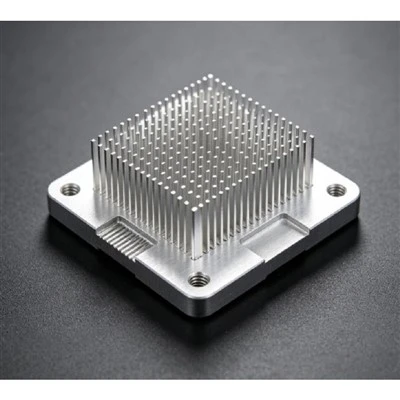
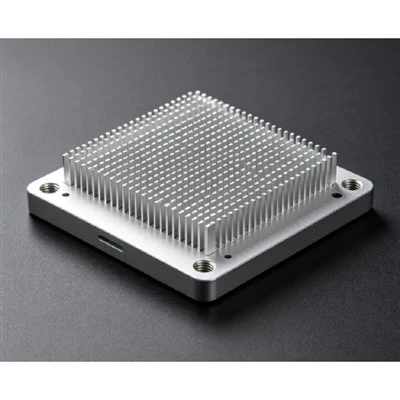
Machined Contact Base: The heat sink base is machined to the specified mounting dimensions and interface requirements. Contact surfaces can be controlled for thickness, flatness, and other drawing-defined characteristics where the heat sink must align with a mating component.
Controlled Fin Geometry: Fin height, thickness, spacing, length, and arrangement are produced according to the approved design. Machining methods are selected according to material properties, tool access, feature depth, and required dimensional accuracy.
Integrated Mounting Features: Drilled holes, tapped holes, slots, pockets, locating features, and mounting interfaces can be incorporated directly into the heat sink. Hole position and feature dimensions are controlled from the released drawing to support final assembly.
Aluminum Construction: Aluminum provides a combination of thermal conductivity, low weight, and machining performance suited to many thermal management components. Alloy and temper are selected according to thermal, mechanical, machining, and surface treatment requirements.
Custom Manufacturing
Drawing and Sample Review:
2D drawings, 3D CAD files, physical samples, and technical specifications are reviewed before manufacturing. Engineering review covers material grade, wall and base thickness, machining allowance, critical tolerances, mounting positions, fin geometry, and surface treatment.
Prototype and Production:
CNC samples can typically be completed within 3–7 working days, depending on part geometry, material, drawing requirements, and finishing specifications. Once the sample is approved, the confirmed design and process requirements are carried into subsequent production.
Surface Treatment:
Aluminum finishing options include anodizing, hard anodizing, coloring, powder coating, oil spraying, electrophoresis, and electroplating. The selected finish is specified according to appearance, surface protection, environmental conditions, and functional requirements.
Technical Specifications
|
Item |
Specification |
|
Product Type |
CNC Machined Aluminum Heat Sinks |
|
Main Material |
Aluminum alloy |
|
Manufacturing Methods |
CNC machining, turning, aluminum profile processing |
|
Overall Dimensions |
Custom according to drawing |
|
Fin Geometry |
Custom according to design |
|
Fin Thickness |
0.5–5.0 mm |
|
Fin Spacing |
1.0–20.0 mm |
|
Base Thickness |
2.0–50.0 mm |
|
Mounting Features |
Holes, threads, slots, pockets |
|
Dimensional Tolerance |
According to drawing requirements; critical features can be specified to ±0.01 mm |
|
Surface Finish |
According to specified finish |
|
Sample Lead Time |
Usually 3–7 working days |
|
Production Stage |
Prototype, sample, and repeat production |
Applications
Electronics: Custom machined heat sinks are used for electronic assemblies, control systems, power-related components, and other applications where controlled thermal dissipation and defined mounting interfaces are required.
Automotive Components: Aluminum heat sink components support automotive electronic assemblies that require application-specific dimensions, mounting patterns, mechanical integration, and controlled surface finishes.
Communication Equipment: Heat sinks are manufactured for communication equipment with defined installation spaces, mounting positions, contact interfaces, and surface requirements.
LED Lighting: Machined aluminum cooling components are produced for LED assemblies where fin geometry, heat dissipation, mounting position, and mechanical integration must be considered together.
Medical Equipment: Custom heat dissipation components support medical equipment and associated mechanical assemblies requiring controlled dimensions, defined mounting features, and specified surface treatment.
Industrial Machinery: Heat sinks are manufactured for automation equipment, electrical systems, industrial controls, and machinery where thermal management components must match specific mounting dimensions and equipment layouts.
Quality Assurance
ISO 9001:2015:
The quality management system is certified to ISO 9001:2015 and covers customer requirement confirmation, production control, inspection records, nonconforming product handling, and process improvement.
First Article Inspection:
FAI is performed according to project requirements before volume production. Inspection can cover dimensions, tolerances, material specifications, surface treatment, mounting features, and other characteristics defined in the approved documentation.
SPC Process Control:
SPC is applied to selected critical dimensions and repeat production characteristics. Process measurements are reviewed during manufacturing to monitor dimensional consistency and support controlled production across batches.
Pre-Production Engineering:
Engineering review covers drawing interpretation, 3D model verification, machining methods, material selection, tolerances, machining allowances, mounting interfaces, and surface treatment requirements before production starts.
Production Communication:
Project updates are provided at defined production stages, including first article completion, key machining operations, surface treatment, inspection, and shipment preparation. Production photographs or videos can be supplied according to project requirements.
After-Delivery Support:
Technical support covers product dimensions, surface finish, assembly conditions, packaging, and transportation-related questions. Inspection data, photographs, videos, and detailed reports can be reviewed when technical clarification is required.
Repeat Order Support:
Approved drawing versions, sample records, machining programs, material requirements, and finishing specifications are retained for repeat projects. This provides a consistent reference for subsequent production batches.
Packaging and Shipment
Fin Protection:
Heat sink fins and machined contact surfaces are protected during handling and packing. Internal separation and suitable protective materials are selected according to fin geometry, surface finish, component dimensions, and packing requirements.
Export Packaging:
Individual protection, internal separation, cartons, and other packing materials are arranged according to component size, quantity, surface condition, and customer requirements. Packaging specifications are confirmed before shipment.
Shipment Preparation:
Inspection status, packing details, quantity, identification, and delivery instructions are verified before shipment. Finished components are prepared according to the confirmed project and handling requirements.
FAQ
Q: Can you manufacture heat sinks from customer drawings?
A: Yes. Production can be based on 2D drawings, 3D CAD files, physical samples, or technical specifications. Engineering review confirms material, dimensions, tolerances, mounting features, fin geometry, and surface treatment before production.
Q: Which aluminum materials can be used?
A: Aluminum alloys and tempers can be specified according to thermal conductivity, mechanical strength, machining performance, weight, and surface treatment requirements. The required material grade should be included in the approved drawing or technical specification.
Q: Can mounting holes and threads be machined?
A: Yes. CNC machining can produce drilled holes, tapped holes, slots, pockets, locating features, and other mounting details defined by the approved drawing. Hole size, thread specification, position, and related tolerances are controlled according to the released requirements.
Q: Can you provide surface treatment?
A: Yes. Available aluminum finishing processes include anodizing, hard anodizing, coloring, powder coating, oil spraying, electrophoresis, and electroplating. The selected treatment is matched to the required appearance, protection, and application conditions.
Q: Can you support prototype production?
A: Yes. CNC samples can typically be completed within 3–7 working days, with the actual schedule determined by part geometry, material, quantity, drawing requirements, and finishing specifications.
Q: What information is needed for a quotation?
A: Provide the 2D drawing or 3D CAD file, material specification, required quantity, critical tolerances, surface treatment, mounting requirements, and delivery requirements. These details allow engineering and production requirements to be reviewed before quotation.

Request a Quote for Your CNC Machined Heat Sinks
Send your drawing, 3D CAD file, or sample information for engineering review. Include the required material, quantity, critical tolerances, surface treatment, and delivery requirements where available. The project can then be reviewed for machining, finishing, inspection, and production requirements.