


Robotic End-Effector Flanges
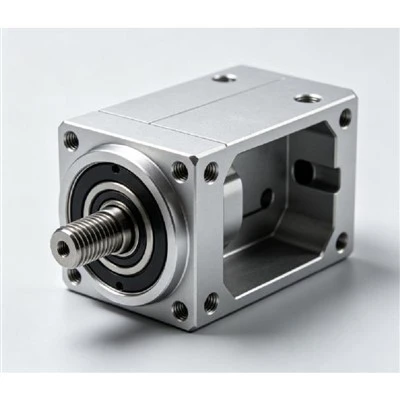
Robotic End-Effector Flanges are precision CNC machined interface components used to connect robotic arms with customized tooling systems. They provide accurate mounting points for grippers, fixtures, sensors, and automation attachments.
Manufactured from aluminum alloys, stainless steel, and engineering metals, these components are produced according to technical drawings, 3D CAD models, or supplied samples. CNC machining creates critical features including mounting hole patterns, locating pilots, threaded holes, counterbores, and precision reference surfaces.
Material selection, dimensional tolerances, surface treatments, and inspection requirements are defined according to structural loads, assembly conditions, and operating environments.
CNC Machining Capabilities for Robotic End-Effector Flanges
Functional Interface Machining
Precision machining focuses on connection areas that directly influence assembly accuracy and positioning stability.
● Mounting Hole Machining
Drilling and tapping processes create accurate fastening points for secure connection between robotic arms and end tools.
● Locating Surface Machining
Precision milling produces reference surfaces and locating features to maintain proper alignment during installation.
● Thread and Clearance Processing
Controlled machining creates threaded holes, clearance holes, and counterbores according to design requirements.
Structural Feature Processing
● Multi-Side Machining
CNC machining processes produce complex flange geometries while maintaining dimensional relationships between functional features.
● Weight Reduction Features
Pocket machining removes unnecessary material from selected areas to reduce component weight while maintaining structural performance.
Material Options and Surface Treatments
Metal Material Selection
Material options are selected based on strength, weight requirements, and environmental conditions.
|
Material |
Typical Application |
|
Aluminum 6061 |
Lightweight robotic tooling interfaces and automation components |
|
Aluminum 7075 |
High-strength flange structures requiring improved mechanical properties |
|
Stainless Steel 304 |
Components requiring corrosion resistance and stable performance |
|
Carbon Steel |
Structural applications requiring high rigidity |
Surface Treatment Options
Anodizing
Provides aluminum surfaces with improved corrosion protection and surface durability.
Powder Coating
Creates a protective external finish for mechanical structures and assemblies.
Electroplating
Adds a metallic coating layer to improve surface performance according to requirements.
Technical Specifications
|
Parameter |
Typical Range |
|
Material |
Aluminum 6061, Aluminum 7075, Stainless Steel 304, Carbon Steel |
|
Manufacturing Process |
CNC milling, drilling, tapping, multi-axis machining |
|
Flange Diameter |
30 mm - 250 mm |
|
Component Thickness |
5 mm - 60 mm |
|
Machining Tolerance |
±0.01 mm to ±0.05 mm |
|
Flatness Control |
0.02 mm - 0.05 mm |
|
Surface Roughness |
Ra 1.6 μm - Ra 3.2 μm |
|
Surface Treatment |
Anodizing, powder coating, electroplating |
|
Inspection Method |
Dimensional inspection, first article inspection |
Applications of Robotic End-Effector Flanges
Robotic Tool Connection
Robotic end-effector flanges provide stable mounting interfaces for different automation tooling applications.
Gripper Mounting Systems
Support accurate installation of gripping tools for automated handling processes.
Assembly Equipment
Provide rigid connection points for fixtures and tooling requiring repeat positioning.
Inspection Automation
Enable stable mounting of sensors and measurement components.
Custom Robotic Tooling
Offer flexible interface solutions for specialized automation equipment.
Manufacturing Process and Quality Control
Controlled Manufacturing Flow
● Engineering Review
Technical drawings, CAD data, materials, tolerances, and finishing requirements are reviewed before production.
● CNC Machining Process
Milling, drilling, tapping, and multi-axis machining operations are completed according to approved manufacturing procedures.
● Final Inspection
Critical dimensions, mounting interfaces, surface conditions, and assembly features are verified before shipment.
Quality Management
● Material Verification
Raw materials are checked according to specified grades and documentation requirements.
● Dimensional Inspection
Key features are measured and recorded to confirm compliance with technical specifications.
● Production Traceability
Manufacturing records support process tracking and repeat production consistency.
Customization Options for Robotic Flanges
Interface Customization
Bolt patterns, locating pilots, threaded holes, and mounting surfaces are produced according to specific connection requirements.
Geometry Adjustment
Diameter, thickness, and structural features can be configured for different tooling designs.
Material and Finishing Selection
Material grades and surface treatments are selected according to mechanical and environmental requirements.
FAQ
Q: What is a robotic end-effector flange used for?
A: A robotic end-effector flange connects a robotic arm with tooling components such as grippers, fixtures, and sensors, providing accurate positioning and secure mechanical attachment.
Q: Can robotic end-effector flanges be customized?
A: Yes. Components can be manufactured according to technical drawings, 3D CAD models, or supplied samples with defined specifications.
Q: Which materials are commonly used for robotic flanges?
A: Aluminum 6061 and 7075 are commonly selected for lightweight structures, while stainless steel and carbon steel are used for higher rigidity and durability requirements.
Q: What machining features affect flange performance?
A: Important features include mounting hole accuracy, locating surfaces, flatness control, thread quality, and alignment between connecting interfaces.
Q: How is production consistency maintained?
A: Consistency is supported through controlled machining procedures, inspection processes, and documented production records.
Hot Tags: robotic end-effector flanges, China robotic end-effector flanges manufacturers, suppliers, factory, 5 Axis CNC Parts, axis machining, CNC Machining Milling Parts, cnc stainless steel machining, precision cnc, precision cnc turning services
Previous
No InformationYou Might Also Like



Send Inquiry