


Robotic Gearbox Housings
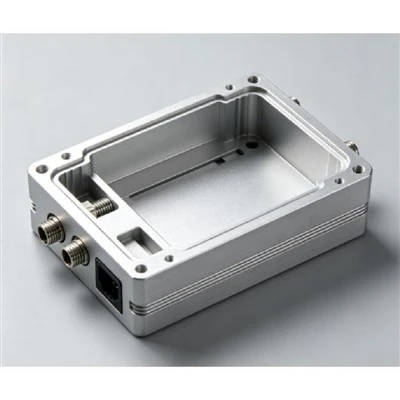
Robotic Gearbox Housings are precision CNC machined structural components used in robotic joint actuator assemblies. They provide rigid support and accurate positioning for gear reducers, bearings, servo motors, and related motion components.
Manufactured from aluminum alloys and engineering metals based on technical drawings, 3D CAD models, or sample parts, these housings integrate key machining features such as bearing bores, motor mounting interfaces, threaded holes, locating surfaces, sealing areas, and internal pockets.
Precision machining of these functional areas helps maintain proper component alignment, mechanical stability, and reliable power transmission within robotic motion systems.
Precision Machining Features
Bearing Bore Processing
Bearing seats are machined through precision boring and finishing operations to achieve accurate diameters, roundness, and alignment requirements. Proper bore quality supports stable installation of rotating components and helps maintain consistent motion performance.
Mounting Interface Machining
Robotic gearbox housings include mounting surfaces for motors, reducers, covers, and connecting structures. Multi-side machining maintains positional relationships between mounting features, supporting accurate assembly between related components.
Internal Structure Machining
Internal cavities, cable passages, and weight-reduction pockets are machined according to structural requirements. Material removal is controlled to reduce unnecessary weight while maintaining housing strength and rigidity.
Material Options
|
Material |
Tensile Strength Range |
Typical Application |
|
Aluminum 6061 |
240-310 MPa |
General robotic housings requiring balanced strength and machinability |
|
Aluminum 6063 |
190-250 MPa |
Lightweight structures for compact robotic assemblies |
|
Aluminum 7075 |
450-570 MPa |
High-load robotic joints requiring higher mechanical strength |
|
Stainless Steel 304 |
500-700 MPa |
Mechanical structures requiring corrosion resistance and durability |
Manufacturing Capabilities
Multi-Axis CNC Machining
3-axis, 4-axis, and 5-axis CNC machining processes are applied for complex housing geometries, including milling, drilling, tapping, boring, and pocket machining. Multi-side processing reduces fixture changes and improves feature alignment.
Engineering Process Review
Before production, machining requirements are reviewed based on material selection, dimensional tolerances, datum references, machining sequence, and inspection requirements. This process supports stable manufacturing and consistent part quality.
Surface Treatment
Surface finishing options include anodizing, hard anodizing, powder coating, painting, and chemical conversion coating. These treatments improve surface protection and support different operating environments and appearance requirements.
Technical Specifications
|
Item |
Typical Capability |
|
Machining Tolerance |
±0.01 mm to ±0.05 mm |
|
Surface Roughness |
Ra 1.6 μm to Ra 3.2 μm |
|
Minimum Wall Thickness |
2 mm to 8 mm |
|
CNC Processing |
3-axis, 4-axis, and 5-axis machining |
|
Material Options |
Aluminum alloys, stainless steel, carbon steel |
|
Machining Features |
Bearing bores, threaded holes, mounting surfaces, internal pockets |
|
Production Range |
Prototype parts, small batches, repeat production |
Applications
Robotic Joint Modules
Used in articulated robots, SCARA robots, and collaborative robotic systems where housing accuracy affects reducer positioning, bearing support, and motor alignment.
Industrial Automation Equipment
Applied in automated machinery, multi-axis motion systems, and rotary mechanisms requiring stable mechanical structures and repeatable movement.
Custom Robotic Systems
Suitable for specialized robotic platforms, mobile robotic equipment, and customized motion assemblies requiring specific mounting patterns and structural designs.
Quality Control and Manufacturing Verification
Dimensional Inspection
Critical features such as bearing bores, hole positions, flatness, and reference surfaces are inspected according to engineering requirements. Measurement records are maintained for production verification.
First Article Inspection
Initial production samples are checked for dimensions, assembly interfaces, and functional requirements before repeat manufacturing.
Process Records
Material certificates, inspection reports, and manufacturing records are maintained to support part traceability and quality control throughout production.
Customization Process
Drawing Evaluation
Production begins with review of drawings, CAD data, material requirements, tolerances, and functional specifications to confirm machining feasibility.
Prototype Development
Prototype parts can be produced for dimensional verification, assembly testing, and design confirmation before repeat production.
Production Manufacturing
Machining processes, fixtures, and inspection checkpoints are arranged according to part structure, quantity requirements, and production conditions.
Procurement Considerations
Mechanical Compatibility
Confirm key interface dimensions, bearing specifications, mounting hole patterns, and assembly requirements before production to ensure proper integration.
Material Selection
Material choice should consider load conditions, weight requirements, environmental factors, and expected service conditions.
Manufacturing Evaluation
Supplier evaluation should focus on CNC machining capability, dimensional control methods, inspection processes, and engineering support throughout the project.
FAQ
Q: What materials are commonly used for robotic gearbox housings?
A: Common materials include aluminum alloys such as 6061, 6063, and 7075, as well as stainless steel and carbon steel options selected according to structural and environmental requirements.
Q: Can robotic gearbox housings be manufactured from CAD files?
A: Yes. Production can be based on engineering drawings, 3D CAD models, or sample parts with required technical information.
Q: What machining features can be integrated into gearbox housings?
A: Typical features include bearing bores, motor mounting surfaces, threaded holes, locating surfaces, sealing grooves, and internal pockets.
Q: What machining tolerance can be achieved?
A: Typical CNC machining capability ranges from ±0.01 mm to ±0.05 mm depending on part geometry, material, and feature requirements.
Q: Are prototype quantities available before production?
A: Prototype and small-batch production are available for design verification, assembly checks, and manufacturing validation before repeat orders.
Hot Tags: robotic gearbox housings, China robotic gearbox housings manufacturers, suppliers, factory, 5 Axis CNC Parts, a axis cnc, cnc surface, cnc turning & milling, machining and cnc, precision cnc machining
Previous
Robotic Actuator HousingsYou Might Also Like


Send Inquiry