


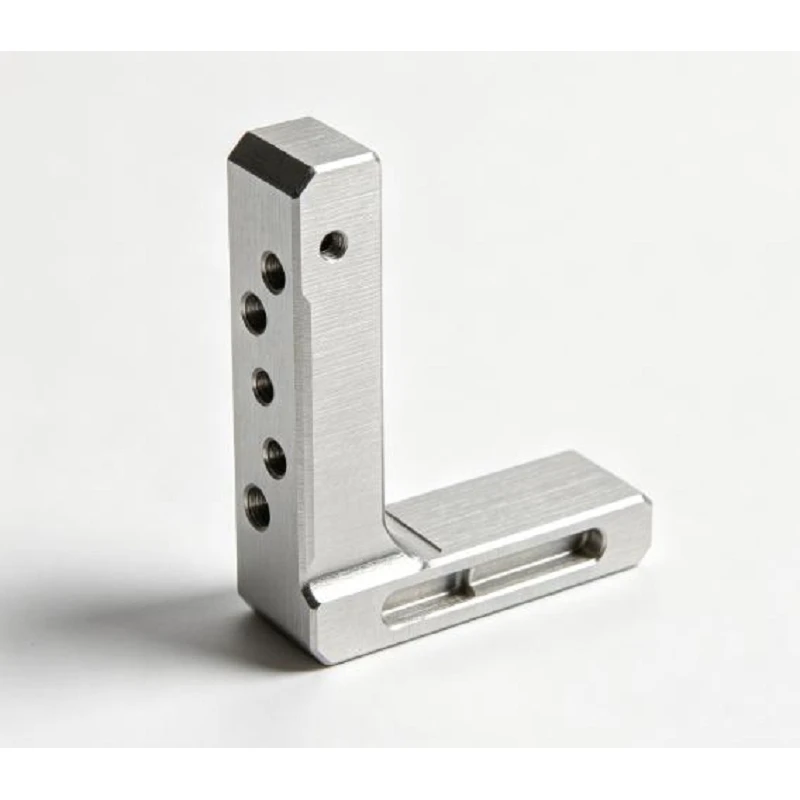
Aluminum L-Brackets
Aluminum L-Brackets are precision-machined right-angle components used for structural connections, equipment mounting, and mechanical support assemblies.
The brackets are produced from aluminum alloys including 6061, 6063, and 7075 according to engineering drawings or 3D models. Machining features can include mounting holes, threaded holes, counterbores, slots, pockets, and locating surfaces.
CNC machining controls critical dimensions between mounting faces and connection points, supporting accurate assembly for industrial equipment, automation systems, and custom mechanical structures.
Product Structure and Machining Features
Right-Angle Geometry
The L-shaped structure creates a fixed 90-degree connection between two surfaces, making it suitable for mechanical positioning and frame assembly applications.
Mounting Features
Hole patterns, threaded locations, and counterbore structures are machined according to assembly requirements to match connecting components.
Structural Optimization
Material thickness, pocket features, and weight-reduction designs can be adjusted based on mechanical requirements and installation conditions.
Aluminum Material Selection
Aluminum 6061
Provides balanced strength, corrosion resistance, and machining performance for general mechanical brackets and equipment structures.
Aluminum 6063
Used for applications requiring lightweight structures and consistent surface appearance.
Aluminum 7075
Selected for components requiring higher strength characteristics while maintaining low component weight.
|
Material |
Tensile Strength |
Yield Strength |
Common Applications |
|
Aluminum 6061-T6 |
290-310 MPa |
240-280 MPa |
Industrial supports, equipment brackets |
|
Aluminum 6063-T5 |
185-220 MPa |
145-180 MPa |
Lightweight structural parts |
|
Aluminum 7075-T6 |
500-570 MPa |
430-500 MPa |
High-strength mechanical assemblies |
CNC Machining Capabilities
Profile Milling
CNC milling processes create accurate external profiles, internal pockets, slots, and structural features based on part drawings.
Hole and Thread Machining
Drilling, tapping, boring, and counterbore operations provide controlled fastening interfaces for mechanical assembly.
Multi-Surface Processing
Machining references between mounting faces, holes, and locating areas are controlled to maintain assembly accuracy.
|
Machining Item |
Typical Capability |
|
CNC Machining Type |
3-axis, 4-axis, 5-axis machining |
|
General Tolerance |
±0.05 mm |
|
Precision Feature Tolerance |
±0.02 mm |
|
Thickness Range |
3 mm - 50 mm |
|
Hole Diameter Range |
2 mm - 30 mm |
|
Thread Processing |
Metric and inch threads |
Surface Treatment Options
Anodizing
Anodized finishes improve surface protection and provide consistent aluminum surface appearance.
Powder Coating
Powder coating provides additional surface coverage for components requiring specific finishing requirements.
CNC Machined Finish
Machined surfaces remain available for functional areas requiring direct contact or precise fitting.
Application Areas
Automation Equipment
Used for mounting assemblies, structural connections, and adjustable support components in automated equipment.
Industrial Machinery
Applied in mechanical frames, machine structures, and equipment modules requiring accurate component positioning.
Electronic Equipment
Suitable for internal supports, mounting structures, and lightweight metal assemblies.
Robotic Systems
Used in custom mechanical structures requiring stable connections and repeatable installation.
Manufacturing and Quality Control
Engineering Review
Part requirements are reviewed before production, including material selection, machining features, dimensions, and surface treatment specifications.
Process Control
Machining procedures are controlled through defined production steps to maintain consistency between samples and repeat orders.
Dimensional Inspection
Critical features including hole position, thickness, flatness, and overall geometry are inspected according to drawing requirements.
Custom Manufacturing Support
Drawing-Based Production
Manufacturing follows customer drawings, CAD files, and technical specifications to match product requirements.
Prototype Development
Prototype quantities support design verification and mechanical assembly evaluation.
Repeat Production
Production processes are maintained for consistent output when the same component specifications are required.
Design and Procurement Considerations
Interface Requirements
Confirm mounting surfaces, hole positions, thread specifications, and connection methods before production.
Material Selection
Choose aluminum grades according to strength requirements, weight targets, and operating conditions.
Finishing Requirements
Define surface treatment, appearance requirements, and functional surface areas during product specification.
Technical Specifications Summary
|
Specification Item |
Details |
|
Product Type |
CNC Aluminum L-Brackets |
|
Material Options |
Aluminum 6061, 6063, 7075 |
|
Manufacturing Process |
CNC Milling, Drilling, Tapping, Boring |
|
Part Thickness |
3 mm - 50 mm |
|
Hole Size |
2 mm - 30 mm |
|
Machining Tolerance |
±0.05 mm typical |
|
Precision Tolerance |
±0.02 mm depending on design |
|
Surface Finish |
Anodizing, Powder Coating, Machined Finish |
|
Production Volume |
Prototype and Repeat Production |
FAQ
Q: What aluminum material is suitable for L-Brackets?
A: Aluminum 6061 is commonly selected for general mechanical applications, while 7075 is considered for structures requiring higher strength characteristics.
Q: Can hole locations and mounting patterns be customized?
A: Yes. Hole positions, thread specifications, counterbores, and other machining features can be produced according to engineering requirements.
Q: What tolerance can CNC machined L-Brackets achieve?
A: Typical machining tolerance is around ±0.05 mm, with tighter control available for specific precision features.
Q: Can surface treatments be applied after machining?
A: Yes. Aluminum L-Brackets can receive finishes such as anodizing, powder coating, or other specified surface treatments.
Q: Are prototypes and repeat orders supported?
A: Yes. Production can support both prototype requirements and recurring manufacturing needs.
Hot Tags: aluminum l-brackets, China aluminum l-brackets manufacturers, suppliers, factory, cnc milling and cnc turning, cnc steel, cnc turning & milling, metal cnc, precision cnc machining services, precision machining cnc
Previous
Aluminum Right-Angle BracketsYou Might Also Like



Send Inquiry