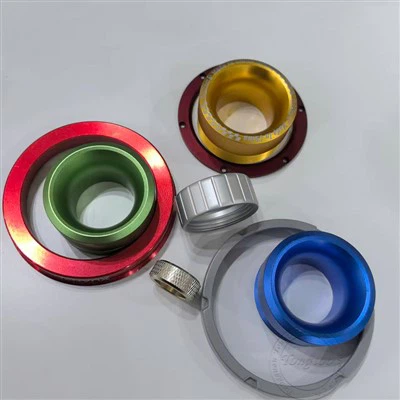
As a supplier of Metal Bending Dies, I've witnessed firsthand the transformative impact of 3D printing technology on the manufacturing industry. 3D-printed metal bending dies are becoming increasingly popular, offering a range of advantages and disadvantages that are crucial for businesses to understand. In this blog post, I'll explore these aspects in detail, providing insights that can help you make informed decisions about incorporating 3D-printed metal bending dies into your manufacturing processes.
Advantages of 3D-Printed Metal Bending Dies
Design Flexibility
One of the most significant advantages of 3D-printed metal bending dies is the unparalleled design flexibility they offer. Traditional manufacturing methods often impose limitations on the complexity of die designs due to the constraints of machining processes. With 3D printing, however, intricate geometries and internal structures can be easily created, allowing for the production of highly customized dies tailored to specific applications. This flexibility enables manufacturers to optimize die performance, reduce material waste, and improve overall efficiency.
For example, 3D printing allows for the integration of cooling channels directly into the die structure. These channels can be designed to follow the contours of the die, providing more efficient cooling and reducing the risk of thermal deformation during the bending process. This not only improves the quality of the bent parts but also extends the lifespan of the die.
Rapid Prototyping
3D printing enables rapid prototyping of metal bending dies, significantly reducing the time and cost associated with traditional prototyping methods. In traditional manufacturing, creating a prototype die can take weeks or even months, involving multiple machining operations and tooling changes. With 3D printing, a prototype die can be produced in a matter of days or even hours, allowing for quick iteration and refinement of the design.
This rapid prototyping capability is particularly beneficial for companies that need to develop new products or test different die designs. By quickly producing and testing prototypes, manufacturers can identify potential issues early in the design process and make necessary adjustments before committing to full-scale production. This not only saves time and money but also reduces the risk of costly mistakes.
Cost-Effectiveness for Small Batch Production
For small batch production runs, 3D-printed metal bending dies can be a cost-effective alternative to traditional manufacturing methods. Traditional die manufacturing often involves high upfront costs for tooling and machining, making it uneconomical for small production volumes. 3D printing eliminates the need for expensive tooling, allowing for the production of dies at a lower cost per unit.
In addition, 3D printing reduces material waste by only using the amount of material required to build the die. This is in contrast to traditional machining methods, which often generate a significant amount of scrap material. By reducing material waste and eliminating the need for expensive tooling, 3D-printed metal bending dies can provide a more cost-effective solution for small batch production.
Improved Material Properties
Advances in 3D printing technology have led to the development of metal powders with improved mechanical properties, making them suitable for use in metal bending dies. These powders can be carefully selected and optimized to meet the specific requirements of the bending process, such as high strength, hardness, and wear resistance.
For example, some 3D-printed metal bending dies are made from stainless steel or tool steel powders, which offer excellent corrosion resistance and high hardness. These properties make the dies more durable and resistant to wear, resulting in longer die life and reduced maintenance costs.
Disadvantages of 3D-Printed Metal Bending Dies
High Initial Investment
One of the main disadvantages of 3D-printed metal bending dies is the high initial investment required for the 3D printing equipment and materials. 3D printers capable of printing metal parts are expensive, and the cost of metal powders can also be significant. In addition, specialized software and training are often required to operate the 3D printers effectively.
This high initial investment can be a barrier for small and medium-sized enterprises (SMEs) that may not have the financial resources to invest in 3D printing technology. However, as the technology continues to evolve and become more widespread, the cost of 3D printing equipment and materials is expected to decrease, making it more accessible to a wider range of businesses.
Limited Production Speed
Compared to traditional manufacturing methods, 3D printing is a relatively slow process. The layer-by-layer construction of 3D-printed parts can take several hours or even days, depending on the size and complexity of the die. This limited production speed can be a disadvantage for companies that require high-volume production of metal bending dies.
However, advancements in 3D printing technology are continuously improving the production speed. New printers with faster printing speeds and larger build volumes are being developed, which will help to reduce the production time for 3D-printed metal bending dies.
Surface Finish and Dimensional Accuracy
The surface finish and dimensional accuracy of 3D-printed metal bending dies may not be as high as those produced by traditional manufacturing methods. 3D printing involves the deposition of layers of metal powder, which can result in a rough surface finish. Post-processing operations, such as machining and polishing, may be required to achieve the desired surface finish and dimensional accuracy.
In addition, the accuracy of 3D-printed parts can be affected by factors such as the printing process, the material properties, and the design of the part. Careful design and process optimization are required to ensure that the 3D-printed metal bending dies meet the required specifications.
Conclusion
3D-printed metal bending dies offer a range of advantages and disadvantages that need to be carefully considered when deciding whether to incorporate them into your manufacturing processes. The design flexibility, rapid prototyping capabilities, cost-effectiveness for small batch production, and improved material properties make 3D-printed metal bending dies an attractive option for many applications. However, the high initial investment, limited production speed, and potential issues with surface finish and dimensional accuracy need to be taken into account.


As a Metal Bending Dies supplier, I'm committed to providing our customers with the best possible solutions for their manufacturing needs. Whether you're interested in traditional or 3D-printed metal bending dies, we have the expertise and experience to help you find the right solution. If you're considering using 3D-printed metal bending dies for your next project, I encourage you to contact us to discuss your requirements and explore the possibilities.
For more information about our other metal mold products, such as Metal Extrusion Die, Precision Stamping Die, and Metal Punch Press Dies, please visit our website or contact us directly. We look forward to working with you to meet your manufacturing challenges.
References
- Gibson, I., Rosen, D. W., & Stucker, B. (2015). Additive Manufacturing Technologies: 3D Printing, Rapid Prototyping, and Direct Digital Manufacturing. Springer.
- Wohlers, T., & Wohlers Associates. (2021). Wohlers Report 2021: 3D Printing and Additive Manufacturing State of the Industry.
- Kruth, J.-P., Leu, M. C., & Nakagawa, T. (2007). Progress in additive manufacturing and rapid prototyping. CIRP Annals - Manufacturing Technology, 56(2), 525-546.