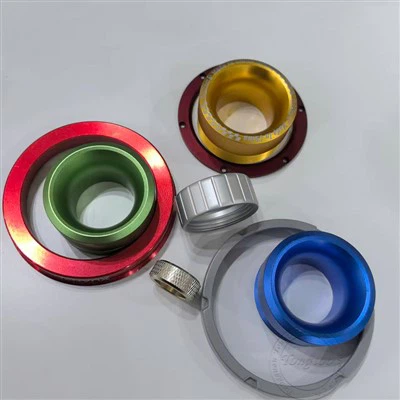
Polishing is a crucial post - processing step in the production of precision die cast parts. As a supplier of Precision Die Cast, I have witnessed firsthand the significant role that polishing plays in enhancing the quality, functionality, and aesthetic appeal of these parts.


Enhancing Surface Finish
One of the primary roles of polishing in precision die cast parts is to improve the surface finish. Die casting, while a highly efficient manufacturing process, can leave behind rough surfaces, burrs, and other imperfections. These surface irregularities can not only affect the appearance of the part but also have a negative impact on its performance.
For example, in applications where the part needs to slide or fit precisely with other components, a rough surface can cause increased friction, leading to wear and tear over time. Polishing helps to smooth out these irregularities, reducing friction and ensuring a better fit. This is particularly important in industries such as automotive and aerospace, where precision and reliability are of utmost importance.
When we talk about surface finish, we are referring to the texture and smoothness of the part's surface. A polished surface has a lower surface roughness, which means it is smoother and more uniform. This can be measured using parameters such as Ra (average roughness) and Rz (maximum height of the profile). By reducing the surface roughness through polishing, we can achieve a surface finish that meets the strict requirements of various industries.
Improving Corrosion Resistance
Another important role of polishing in precision die cast parts is to enhance corrosion resistance. Die cast parts are often made from metals such as aluminum, zinc, and magnesium, which are prone to corrosion. A polished surface can act as a barrier against corrosive agents, such as moisture and chemicals.
When a part is polished, the surface is made more uniform, and any microscopic cracks or pores are filled in. This reduces the surface area exposed to the environment, making it more difficult for corrosive agents to penetrate the metal. In addition, a polished surface can also be coated with protective layers more effectively. For example, a polished aluminum die cast part can be anodized more evenly, providing an additional layer of protection against corrosion.
In industries where parts are exposed to harsh environments, such as marine and chemical processing, corrosion resistance is a critical factor. By ensuring that our precision die cast parts have a polished surface, we can extend their lifespan and reduce the need for frequent replacements.
Aesthetic Appeal
In many industries, the aesthetic appeal of a product is just as important as its functionality. Polishing can significantly enhance the visual appearance of precision die cast parts, making them more attractive to customers.
A polished surface has a shiny, reflective finish that gives the part a high - end look. This is particularly important in consumer products, such as electronics and home appliances, where the appearance of the product can influence the purchasing decision. For example, a polished aluminum die cast housing for a smartphone can give the device a sleek and modern look, making it more appealing to consumers.
Moreover, a polished surface can also hide minor defects and imperfections, giving the part a more flawless appearance. This is especially useful in industries where the parts are on display, such as in architectural applications.
Precision and Dimensional Accuracy
Polishing can also contribute to the precision and dimensional accuracy of precision die cast parts. During the die casting process, there can be slight variations in the dimensions of the part due to factors such as shrinkage and thermal expansion. Polishing can help to correct these minor dimensional errors.
By carefully controlling the polishing process, we can remove a small amount of material from the surface of the part, ensuring that it meets the required dimensions. This is particularly important in applications where tight tolerances are required, such as in the medical and aerospace industries.
For example, in the production of medical devices, precision is crucial. A polished die cast part can ensure that the device fits precisely with other components, reducing the risk of malfunction and improving patient safety.
Cost - Effectiveness
While polishing adds an extra step to the manufacturing process, it can actually be cost - effective in the long run. By improving the surface finish, corrosion resistance, and dimensional accuracy of the parts, we can reduce the likelihood of product failures and returns. This can save both time and money for both the manufacturer and the customer.
In addition, a polished part can often command a higher price in the market due to its improved quality and aesthetic appeal. This can increase the profit margin for the manufacturer. For more information on quality die casting, you can visit Quality Die Casting.
Compatibility with Other Processes
Polishing also makes precision die cast parts more compatible with other manufacturing processes. For example, a polished surface is more suitable for painting, plating, and bonding. When a part is polished, the surface is cleaner and more uniform, which allows for better adhesion of paints, coatings, and adhesives.
In the case of 3D printed die castings, polishing can help to integrate the printed parts with the die casting process more effectively. For more details on 3D printed die castings, you can refer to 3D Printed Die Castings.
Conclusion
In conclusion, polishing plays a vital role in the production of precision die cast parts. It enhances the surface finish, improves corrosion resistance, adds aesthetic appeal, ensures precision and dimensional accuracy, and is cost - effective. As a Precision Die Cast supplier, we understand the importance of polishing and strive to provide our customers with high - quality polished parts.
If you are in the market for precision die cast parts, we invite you to contact us for a procurement discussion. We have the expertise and experience to meet your specific requirements. For more information on our precision die casting services, please visit Precision Die Cast.
References
- "Die Casting Handbook" by J. Campbell
- "Surface Engineering for Corrosion and Wear Protection" by K. Bobzin